A practical guide to winter driving in Iceland covering tire laws, vehicle choice, road closures, wind hazards, emergency resources, and the 2026 kilometer road tax.
What winter driving in Iceland actually looks like
If you are moving to Iceland and plan to own or rent a car, winter driving is something you will face for roughly six months of the year. Iceland's winter roads are not like winter roads elsewhere in northern Europe. The combination of sudden weather changes, extreme wind, limited daylight, and long stretches without services makes winter driving in Iceland a distinct skill to learn.
This is not a scare piece. Icelanders drive through winter every day, and so do thousands of immigrants. But the learning curve is real, and the consequences of being unprepared range from expensive (a car door ripped off by wind) to dangerous (sliding off an icy road in a remote area with no phone signal). This article covers the rules, the gear, the hazards, and the habits that will keep you safe.
Table of contents
When winter driving season starts (and what changes)
Iceland's official winter tire period runs from November 1 to April 15. In practice, winter conditions can arrive earlier and linger later, particularly in the north and east.
During these months, several things change at once. Daylight drops sharply, reaching as low as 3 to 4 hours around the winter solstice in December. Roads that were dry and predictable in summer become icy, snow-covered, or both. Mountain passes and heaths that form part of Route 1 (the Ring Road) close periodically during storms. And all highland F-roads are closed entirely for the season.
For a fuller picture of how Iceland's road network works year-round, see the pillar page at Moving to Iceland.
Winter tires: the law and your options
From November 1 to April 15, all vehicles in Iceland must have tires with a minimum tread depth of 3 mm. While Icelandic law does not technically mandate winter-specific tires by name, drivers are legally responsible for having tires appropriate for the conditions. In practice, this means winter tires (marked M+S or 3PMSF) are expected during this period.
There are two main types to consider.
Studded tires have small metal pins embedded in the tread. They provide superior grip on hard-packed snow and ice, particularly on rural roads, bridges, and mountain passes. Studded tires are legal between November 1 and April 15. Outside that window, they are prohibited, and driving on studded tires after the deadline carries a fine of 20,000 ISK per tire (as of March 2026).
Non-studded (friction) tires use softer rubber compounds and deep grooves to grip snow. They are quieter and cause less road wear. For driving within the capital area, where roads are regularly cleared and salted, friction tires are often sufficient.
The city of Reykjavík actively discourages studded tires within city limits because they erode asphalt, produce dust that harms air quality, and increase road maintenance costs. If most of your driving is urban, friction tires are the better choice. If you regularly drive between towns, through mountain passes, or in the north and east, studded tires earn their keep.
Snow chains are not used in Iceland and are prohibited when they would damage road surfaces.
Choosing the right vehicle
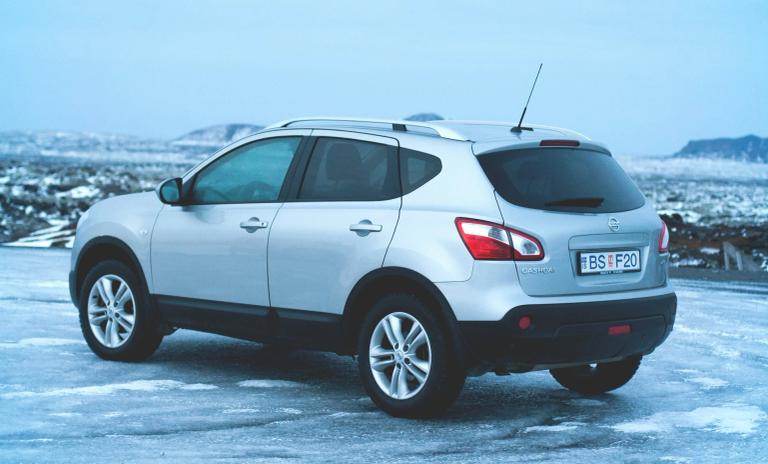 A 4WD vehicle is strongly recommended for winter driving in Iceland outside the greater Reykjavík area. Two-wheel-drive cars can handle well-maintained city roads, but icy rural routes, mountain heaths, and snow-covered secondary roads are significantly safer with four-wheel drive.
If you are buying a car in Iceland, factor in winter capability from the start. Most Icelanders who live outside the capital area drive SUVs or 4WD vehicles year-round for exactly this reason.
For renters, reputable agencies fit winter tires automatically during the November to April period. Confirm this in writing before you pick up the car, and ask whether the tires are studded or friction.
Road conditions and closures
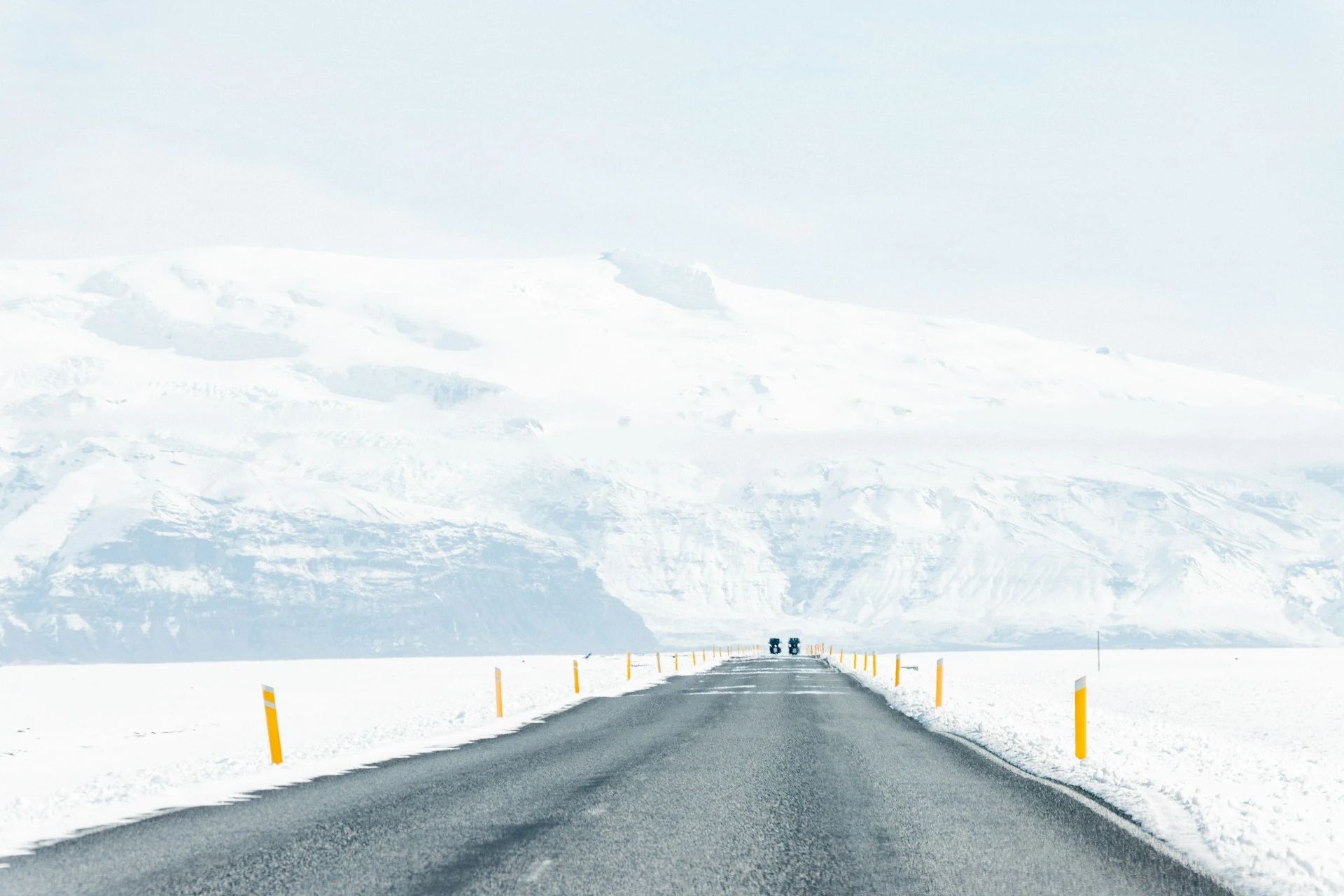
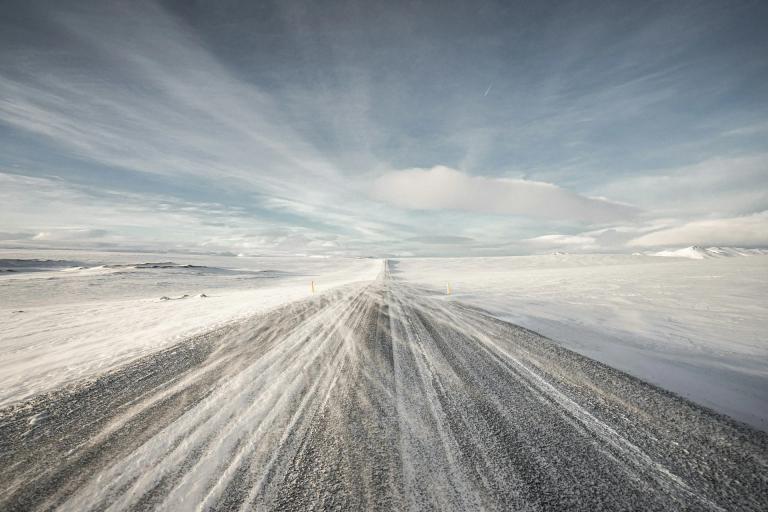
Road conditions in Iceland change fast. A clear highway can become an ice sheet or a whiteout within an hour. Checking conditions before every drive is not optional in winter.
The primary resource is umferdin.is, the Icelandic Road and Coastal Administration's (Vegagerðin) live condition map. The map uses a color-coded system ranging from green (passable) through yellow and orange (increasingly difficult) to red (closed or impassable). The full legend on the site includes additional categories for ice, wet snow, and roads with no winter service. You can also call 1777 for road condition updates (open 06:30 to 22:00 during winter).
Key points about winter closures:
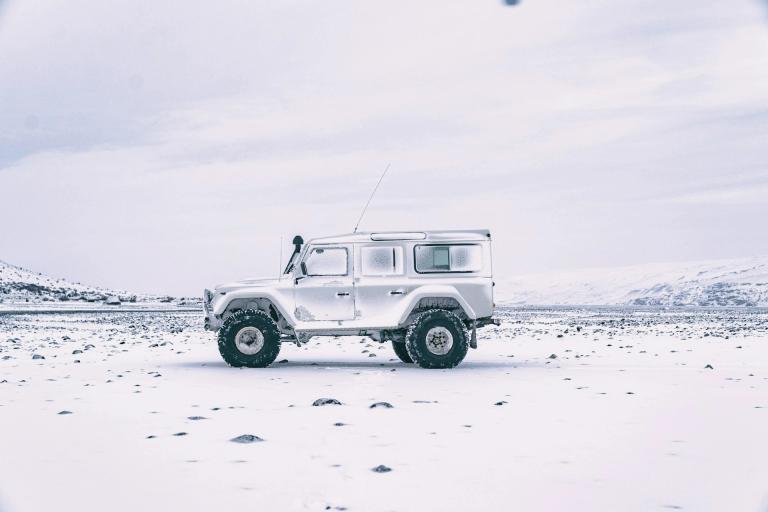 All highland roads (F-roads) close for winter, typically from late September or October through late June. These roads are impassable even with a capable vehicle, and attempting them is both illegal and dangerous. Fines for off-road driving can reach 400,000 ISK per passenger.
Mountain passes and heaths on Route 1 close periodically during storms. The most commonly affected stretches include Hellisheiði, Holtavörðuheiði, and Öxnadalsheiði. These closures can last hours or, in severe storms, a full day or more.
Sections of the Ring Road in the east and north are more prone to closures than the southwest. If you are planning a long drive, always have a backup plan and a place to stop.
For broader context on getting around Iceland without a car, see our public transport guide.
Wind: Iceland's most underestimated hazard
Most newcomers worry about ice and snow. In reality, wind is the hazard that catches people off guard.
Iceland routinely experiences gusts above 25 m/s (90 km/h), and severe storms can produce gusts over 35 m/s (126 km/h). Wind at these speeds can push a car sideways, make high-profile vehicles (vans, SUVs) unstable, and, most infamously, rip car doors off their hinges.
Car door damage is one of the most common (and most expensive) rental car claims in Iceland, and most insurance policies do not cover it.
How to handle wind:
Park nose-into-the-wind whenever possible. When you open your door, grip it firmly with both hands. The driver should exit first and help passengers. Never let a door swing freely in windy conditions.
On open roads, grip the steering wheel with both hands and be prepared for sudden crosswinds, especially on bridges, causeways, and exposed heaths. Reduce your speed. If the Icelandic Met Office (vedur.is) shows orange or red wind warnings for your area, consider postponing your drive.
Daylight and darkness
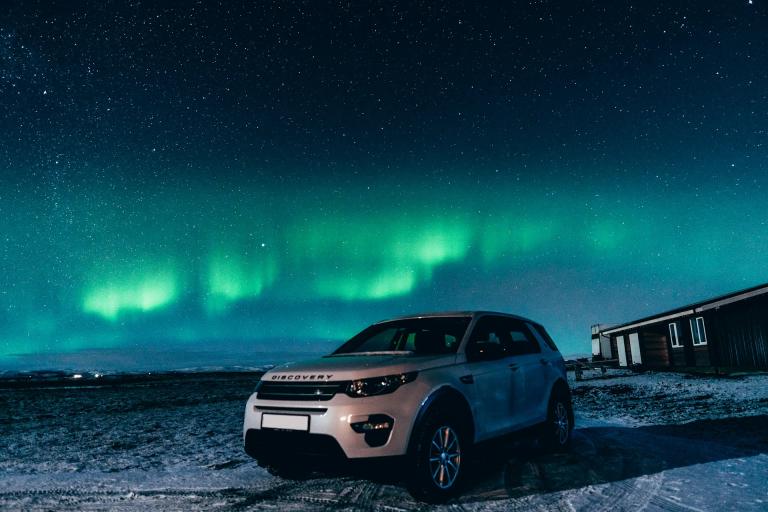 Around the winter solstice (late December), Reykjavík gets roughly 4 to 5 hours of daylight. In Akureyri, further north, it can be closer to 3 hours. By late January, daylight starts returning noticeably, and by March, days are already longer than in much of mainland Europe.
For practical purposes, this means winter road trips should be planned around the limited daylight window. Pick one or two destinations per day and schedule your driving for the lightest hours, roughly 10:00 to 15:00 in mid-winter.
Driving in darkness on unfamiliar Icelandic roads requires extra caution. Roads are unlit outside of towns, sheep and other animals can appear without warning, and black ice is invisible. Use headlights at all times (this is the law year-round) and reduce speed below the posted limit when conditions are poor.
The rules of the road
Iceland's traffic laws are strictly enforced. Speed cameras are common, and fines are steep. Here are the rules that matter most for winter driving in Iceland.
Rule | Detail |
|---|---|
Speed limits | 50 km/h in urban areas, 80 km/h on gravel roads, 90 km/h on paved highways |
Headlights | Must be on at all times, day and night |
Seatbelts | Required for all passengers, front and rear |
Phone use | Prohibited while driving unless hands-free |
Alcohol | Near-zero tolerance; even one drink can put you over the legal limit |
Off-road driving | Illegal at all times; fines up to 400,000 ISK per passenger |
Speed limits assume good conditions. In winter, driving at the posted limit on an icy or snow-covered road is often too fast. Drive to the conditions, not the sign.
One-lane bridges are common on rural roads, including sections of Route 1. The vehicle closer to the bridge has the right of way. Slow down well in advance and be prepared to stop.
In roundabouts, the inner lane has right of way. The outer lane must yield to vehicles exiting from the inner lane.
If you are new to driving in Iceland and need to convert your license, see our license conversion guide.
The kilometer road tax
As of January 1, 2026, Iceland replaced its fuel-based road tax with a per-kilometer road usage charge called the kílómetragjald (kilometer fee). This applies to all vehicles on Icelandic roads, regardless of fuel type.
For standard passenger vehicles and SUVs up to 3.5 tonnes, the rate is 6.95 ISK per kilometer driven (as of January 2026), as published on island.is. Vehicle owners must log odometer readings periodically, and the Directorate of Internal Revenue bills based on distance.
The trade-off: fuel taxes were removed from the pump price, so petrol and diesel became noticeably cheaper in 2026. Fuel prices dropped from roughly 300 ISK/L in late 2025 to around 190–225 ISK/L in early 2026, depending on the station. For most drivers, the net cost of driving per kilometer is roughly the same as before.
If you own a car, you will receive a monthly bill from the tax authorities. If you are renting, rental agencies handle the fee on your behalf, typically as a flat daily rate of around 1,390–1,550 ISK/day (as of early 2026), though the exact amount varies by company.
For more on Iceland's tax system generally, see our tax guide.
Insurance for winter driving
 If you own a car, standard liability insurance (ábyrgðartrygging) is legally required in Iceland. For winter driving, consider adding gravel damage protection and windscreen coverage, as loose gravel and road debris are common hazards even on maintained roads.
If you are renting, the base Collision Damage Waiver (CDW) included with most rentals comes with a high deductible. Worth adding for winter driving:
Gravel Protection (GP) covers chips and cracks from loose road surface material. Sand and Ash Protection (SAAP) covers damage from volcanic debris and sandstorms, which can occur year-round in certain areas. Windscreen coverage handles the most common type of winter damage.
Wind damage to car doors is typically excluded from all insurance policies. The best protection is caution: park nose-into-the-wind and hold doors firmly.
For a deeper look at car insurance options, see our car insurance guide.
Essential apps and emergency numbers
Before driving anywhere in Iceland during winter, set up these resources on your phone.
112 is Iceland's emergency number for police, fire, and medical emergencies. Save it in your phone contacts.
The 112 Iceland app (available on iOS and Android) lets you share your GPS location directly with emergency responders. It also lets you log a travel plan. If you get into trouble in a remote area with no phone signal, your last known location is on file.
umferdin.is provides the live road condition map, updated frequently during winter. Bookmark it or use the Vegagerðin app.
vedur.is is the Icelandic Meteorological Office, where you check wind, precipitation, and storm warnings. The Veður app sends real-time alerts.
SafeTravel.is lets you register a travel plan so rescue teams know your intended route. It also provides travel condition alerts.
Get into the habit of checking umferdin.is and vedur.is every morning before you leave, and again before any long drive.
Winter driving habits that matter
Surviving Icelandic winters behind the wheel comes down to habits, not heroics.
Slow down. This is the single most important rule. Reduce speed on icy roads, in poor visibility, and in strong wind. The posted limit is a maximum in ideal conditions, not a target in a snowstorm.
Keep your fuel tank above half. Petrol stations can be far apart in rural Iceland, and a storm delay could leave you waiting in your car for hours. A full tank also means a warm car.
Do not use cruise control on slippery roads. Cruise control can cause loss of traction. Stay in manual control of your speed at all times.
Bridges freeze before roads do. Approach any bridge with extra caution. Even if the road feels fine, the bridge surface may be a sheet of ice.
Carry emergency supplies. A warm blanket, a phone charger, water, and some non-perishable food are worth keeping in the car from November through April. If you get stranded, stay with the car, turn on hazard lights, and call 112.
Share your travel plan. Tell someone where you are going and when you expect to arrive. Use the SafeTravel app or simply text a friend.
Turn back if conditions deteriorate. There is no shame in cancelling a drive. Icelanders do it all the time. If a road closure or storm warning appears, find the nearest safe town, adjust your plans, and try again tomorrow.
Frequently asked questions
Is winter driving in Iceland dangerous?
It is not inherently dangerous, but it demands preparation and respect for conditions. Thousands of people drive safely through Icelandic winters every year. The risks increase when drivers are unprepared, overconfident, or ignore weather warnings.
Do I need a 4WD car for winter?
For driving within Reykjavík on well-maintained roads, a front-wheel-drive car with good winter tires can be adequate. For travel between towns, through mountain passes, or anywhere outside the capital area, a 4WD is strongly recommended.
Are F-roads open in winter?
No. All highland F-roads close for winter and do not reopen until late June or later, depending on snow conditions. Attempting to drive closed F-roads is illegal and extremely dangerous.
What should I do if I get stuck in a snowstorm?
Stay with your vehicle. Turn on hazard lights so snowplows and rescue teams can see you. Keep the engine running for heat, but check occasionally that the exhaust is not blocked by snow. Call 112 if you are in danger.
How do I check road conditions?
Use umferdin.is for the live road map and call 1777 for voice updates. Check vedur.is for weather forecasts and wind warnings. Both should be checked before every winter drive.
Does the new kilometer tax affect how much I pay to drive?
The kílómetragjald replaced the old fuel tax. You now pay 6.95 ISK per kilometer (for standard vehicles, as of January 2026), but fuel prices are lower. For most drivers, the overall cost per kilometer is roughly unchanged. See island.is/en/kilometer-fee for official details.
Last updated: March 2026