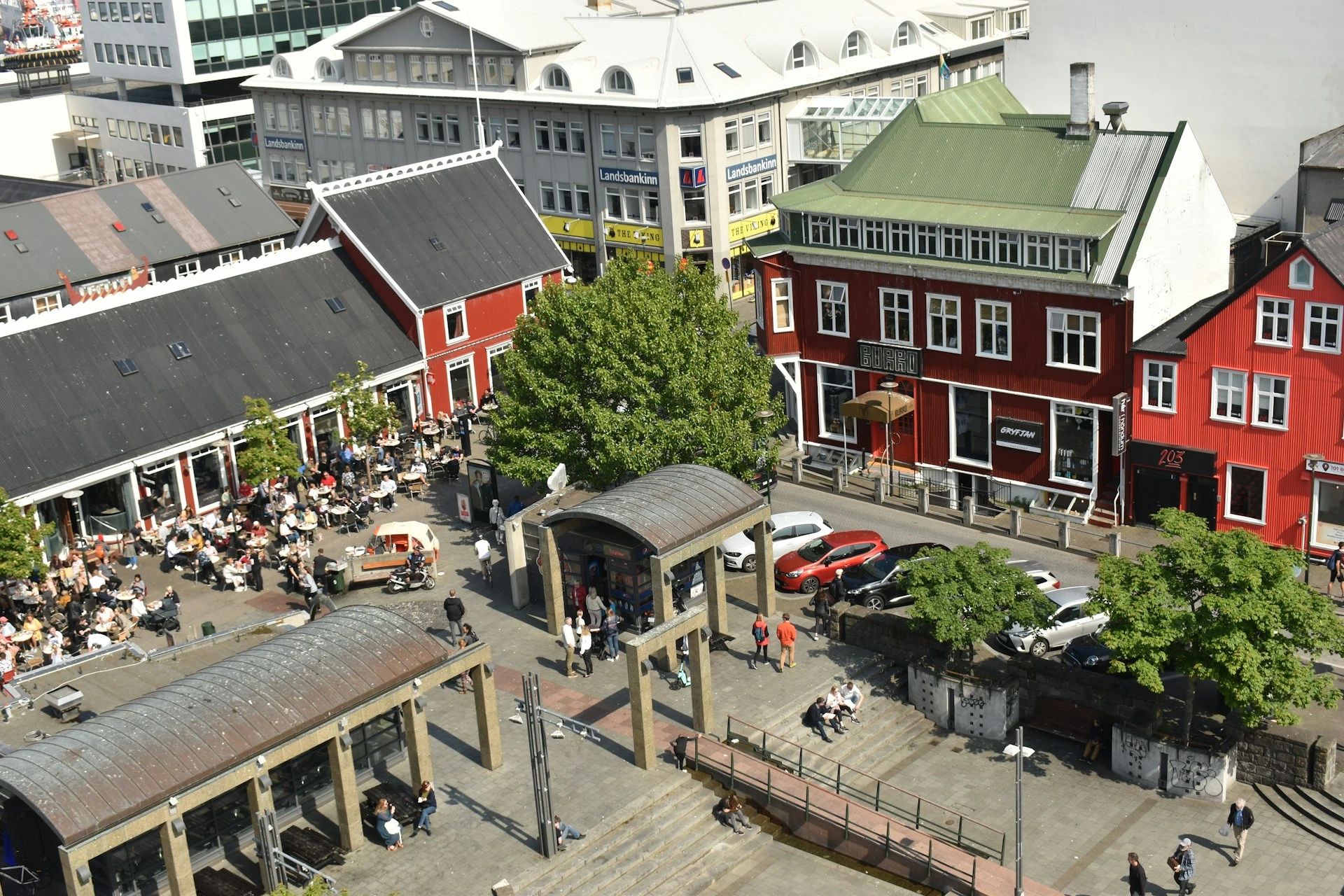
A practical guide for EU and EEA citizens relocating to Iceland, covering free movement rights, domicile registration, health insurance, work, and first steps after arrival.
Why moving to Iceland from Europe is simpler than you think
Iceland is not a member of the European Union. It is, however, a member of the European Economic Area (EEA) through the European Free Trade Association (EFTA), and it is part of the Schengen Area. In practice, this means EU citizens have the right to live and work in Iceland without a visa or work permit.
This single fact changes everything about the process of moving to Iceland from Europe. Where non-EEA citizens must secure employer-sponsored permits, pass labour market tests, and wait months for processing, EEA citizens can arrive, register, and start working almost immediately.
That said, "no visa required" does not mean "no paperwork." You still need to register with Icelandic authorities, prove you can support yourself, and sort out health insurance during a transitional period. Here is exactly what EU and EEA citizens need to do, from registration to your first month on the ground.
Table of contents
Who qualifies for free movement to Iceland
Free movement rights apply to citizens of all 27 EU member states plus Norway, Liechtenstein, and Switzerland. The full list from Registers Iceland includes: Austria, Belgium, Bulgaria, Croatia, Cyprus, Czech Republic, Estonia, France, Germany, Greece, Hungary, Ireland, Italy, Latvia, Liechtenstein, Lithuania, Luxembourg, Malta, the Netherlands, Poland, Portugal, Romania, Slovakia, Slovenia, Spain, and Switzerland.
Nordic citizens (Denmark, Finland, Norway, and Sweden) also qualify and benefit from an even simpler process, covered in a separate section below.
UK citizens do not have EEA free movement rights following Brexit. See the section at the end of this article for what applies to them.
If you hold citizenship from any of the countries listed above, you do not need a residence permit or work permit to live and work in Iceland. Your right of residence is automatic under the EEA Agreement.
How to register your domicile
EEA citizens can stay in Iceland for up to three months without registering. If you are job-hunting, you can stay up to six months before you must register. For stays longer than six months, registration is mandatory.
In practice, most people moving to Iceland from Europe should register as soon as possible after arrival. A registered lögheimili (legal domicile) is the gateway to your kennitala (national ID number), and without a kennitala you cannot open a bank account, sign a rental lease, get a phone contract, or access public services.
Registration is handled by Þjóðskrá Íslands (Registers Iceland) and starts with an online application.
The process:
Fill out form A-271 (for stays exceeding six months) or A-263 (for stays between three and six months) on the Registers Iceland website.
Submit the required documents electronically (details vary by category, covered below).
Visit a Registers Iceland office in person with your passport or valid travel document and any original documents submitted in the application.
Receive your kennitala and registration confirmation by email once processing is complete.
Processing time is up to 10 working days after all documents have been submitted and the in-person visit is complete (as of March 2026). In many cases it is faster.
For more on the kennitala and what to do with it, see our kennitala guide.
Registration categories and documents
Registers Iceland sorts EEA applicants into categories. The category determines what supporting documents you need.
Employees must prove they are employed by a legal entity in Iceland and that their wages meet minimum subsistence requirements. You will need a copy of your passport and, optionally, a birth certificate and marital status certificate. Employment verification is handled between Registers Iceland and your employer.
Self-sufficient individuals must show they have enough funds to support themselves. The minimum financial thresholds (as of March 2026) are:
Single individual: 247,572 ISK per month
Married couple: 396,115 ISK combined per month
Adult dependent living with parents: 208,591 ISK per month
Registers Iceland may ask for updated proof of funds at a later date. Self-sufficient registrants must also hold comprehensive private health insurance for the first six months.
Students must provide proof of admission to a recognised Icelandic educational institution and evidence they can financially support themselves during their studies. Private health insurance covering at least the first six months is also required. For more on studying in Iceland, see our student visa guide (which covers both EEA and non-EEA students).
Family members of EEA citizens can register alongside or after their EEA family member. If your relative is registered as an employee or self-employed person in Iceland, you do not need to demonstrate financial means or health insurance separately. Otherwise, you will need a signed declaration of financial support from your relative and proof of comprehensive health insurance for the first six months.
For all categories, applicants are encouraged to submit a marital status certificate, as marital status can affect certain rights and entitlements in Iceland.
Special rules for Nordic citizens
Citizens of Denmark (including the Faroe Islands and Greenland), Finland (including the Åland Islands), Norway, and Sweden follow a separate, simpler process. Nordic countries have a longstanding registration agreement that predates the EEA.
If you are moving from a Nordic country and plan to stay more than six months, visit Registers Iceland or a local registration office in person, present your passport, and submit form A-258. Registers Iceland then notifies your departure country automatically, and your domicile registration transfers between the two national registries.
Nordic citizens do not need a work or residence permit. They also benefit from faster access to healthcare. Under Nordic cooperation agreements, citizens moving to Iceland from another Nordic country can apply for Icelandic health insurance as soon as their legal domicile is registered. Once the previous country confirms your insurance status, coverage takes effect from the registration date. There is no six-month waiting period. (An application is still required; you are uninsured while it is being processed, so bring your EHIC from your home country as a safety net.)
Nordic citizens also have a faster path to Icelandic citizenship. Those who acquired their Nordic citizenship at birth can obtain Icelandic citizenship by notification after just three years of residence, a simpler and cheaper process than a full application. Nordic citizens who do not meet those conditions can apply through the general route after four years. For most other nationalities, the requirement is seven years. See our citizenship guide for full details.
Nordic citizens can vote in Icelandic municipal elections immediately upon registering their domicile, with no waiting period. Other foreign nationals must wait three years.
Health insurance for EEA citizens in Iceland
Iceland's public healthcare system covers everyone with legal residence and a kennitala, but there is a waiting period. For most EEA citizens, you must have your legal domicile registered in Iceland for six consecutive months before you gain access to Iceland's public health insurance (Sjúkratryggingar Íslands).
During that six-month gap, you have two options.
Option 1: Transfer your insurance from your home country. Before leaving, request an E-104 or S041 form from the health insurance authority in your previous country of residence. This document confirms you were insured less than two months before registering in Iceland. Submit it to Iceland Health along with your application. If approved, your coverage can transfer without a gap.
EEA citizens who are posted to Iceland by a foreign employer should also obtain an A1 certificate (confirming social security coverage in the sending country) and an S1 certificate (requesting that Iceland provide healthcare at the sending country's expense).
Option 2: Carry private health insurance. This is required for self-sufficient individuals and students during the six-month waiting period. Make sure the policy covers healthcare in Iceland specifically, not just general international travel.
In either case, bring your European Health Insurance Card (EHIC) from your home country. While the EHIC is designed for temporary stays rather than permanent relocation, it can serve as a safety net for emergency care during the transition period.
Once you are covered by Iceland's public system, you pay subsidised rates for GP visits, prescriptions, and specialist care. Iceland also has a monthly cost ceiling that limits out-of-pocket expenses. For the full picture, see our healthcare guide.
Finding work as an EU citizen
As an EEA citizen, you have the same right to work in Iceland as an Icelandic national. No work permit, no labour market test, no employer sponsorship. You can accept any job, switch employers freely, and start your own business.
This is a significant advantage, and one of the main reasons moving to Iceland from Europe is far less complicated than relocating from outside the EEA. Non-EEA citizens can only work in Iceland with a permit tied to a specific employer who has demonstrated they could not fill the role with an EEA candidate. You face no such restriction.
Poland is by far the largest source country for immigrants in Iceland. As of January 2025, 22,925 Polish-born residents lived in Iceland, accounting for 31.1% of the total immigrant population. Lithuanians, Romanians, and other EU nationals make up a significant share as well. Most work in construction, tourism and hospitality, healthcare, fisheries, and retail.
The Icelandic job market is small (a total labour force of roughly 245,000, with about 220,000 employed) and relies heavily on personal connections. The main job boards are Alfred.is and Job.is, with LinkedIn increasingly used for white-collar and tech roles.
Salaries are set through collective bargaining agreements, not by a statutory minimum wage. The effective minimum for full-time unskilled work is approximately 513,000 ISK gross per month (as of January 2026). Around 90% of workers are covered by a collective agreement, and union membership is standard.
For a detailed look at job search strategy, in-demand sectors, and salary data, see our job search guide and salary guide. If you are thinking about starting your own business, our business startup guide covers the registration and legal framework.
Getting set up after arrival
The first few weeks after moving to Iceland from Europe follow a predictable sequence, whether you come from Berlin, Warsaw, or Lisbon. Here is the practical order.
Week 1: Register your domicile and receive your kennitala. Start the online application at skra.is or through island.is, then visit a Registers Iceland office in person with your passport. Processing takes up to 10 working days, though it is often faster.
Week 1–2: Open a bank account. With your kennitala and passport, visit any of Iceland's three major banks: Landsbankinn, Íslandsbanki, or Arion Bank. All offer English-language service. The process takes about 30 minutes. See our banking guide for a comparison.
Week 1–2: Get a phone number. Prepaid SIM cards are available without a kennitala at convenience stores. For a postpaid contract plan, you will need your kennitala. Our phone and internet guide covers the main providers and pricing.
Week 1–2: Register at a health centre. Once you have your kennitala, register at a heilsugæslustöð (primary health centre) through island.is. If you do not choose one, you are assigned to the centre nearest your registered address. Submit your health insurance transfer documents (E-104 or S1) to Iceland Health if applicable.
Week 2–4: Find housing (if not already secured). The rental market in Reykjavik is tight. Many EEA arrivals book temporary accommodation (Airbnb or guesthouse) for the first two to four weeks while searching. See our rental guide and rent costs guide for current pricing and listings.
Our first 30 days checklist walks through each step in detail, with timelines and links to the right forms. For the broader picture of relocating to Iceland, including housing, cost of living, and culture, see our complete relocation guide.
Bringing your family
EEA citizens can bring their family members to Iceland. Spouses, registered partners, children, and dependent relatives are entitled to register alongside you.
If your family members are also EEA citizens, they register through the same process described above, selecting the appropriate category (employee, student, family member, etc.).
If your family members are non-EEA citizens, the process is different. They will need to apply for a residence permit through the Directorate of Immigration. The EEA citizen must demonstrate sufficient income and housing to support the family. Processing times are typically longer for non-EEA family members. Our family reunification guide covers the full process.
Children need to be registered at Registers Iceland. There are special rules for minors who do not move with both custodial parents, so check with Registers Iceland if this applies to your situation.
Permanent residence and citizenship
After five continuous years of legal residence in Iceland, EEA citizens may be eligible for a permanent right of residence. This right means you can remain in Iceland indefinitely, even if you no longer meet the original conditions of your registration (e.g., you stop working or exhaust your savings). You do not lose permanent residence unless you leave Iceland for more than two consecutive years.
Icelandic citizenship requires seven years of domicile for most nationalities. Nordic citizens can qualify in as few as three years. Citizenship grants the right to vote in parliamentary and presidential elections. (Municipal voting rights come earlier: immediately for Nordic citizens, and after three years of registered domicile for other foreign nationals.) Iceland allows dual citizenship, so you do not need to give up your existing EU passport.
For the full application process, requirements, and timeline, see our citizenship guide.
A note for UK citizens
Since Brexit took effect on 1 January 2021, the UK is no longer part of the EEA. British citizens who were legally residing in Iceland before that date retain their rights under the UK-EEA EFTA Separation Agreement and have been issued residence permit cards by the Directorate of Immigration.
UK citizens who did not have residence status in Iceland before 1 January 2021 must now apply for a residence permit through the same process as other non-EEA nationals. This means employer-sponsored work permits, student permits, or family reunification applications through the Directorate of Immigration.
UK citizens do not need a visa for short stays (up to 90 days in any 180-day period within the Schengen Area). For longer stays or employment, the work permit guide covers the applicable process.
Frequently asked questions
Do I need a visa to move to Iceland from the EU? No. Moving to Iceland from Europe as an EU or EEA citizen does not require a visa or work permit. You do need to register your legal domicile with Registers Iceland if staying longer than three months.
How long can I stay in Iceland before I have to register? You can stay up to three months without registering. If you are actively looking for work, the period extends to six months. For stays beyond six months, registration is mandatory. In practice, register as soon as possible because you need a kennitala to access banking, housing, and healthcare.
Do I need health insurance as an EU citizen in Iceland? For the first six months after registering your domicile, you are not automatically covered by Iceland's public health system. You can bridge this gap by transferring your insurance from your home country (using an E-104 or S1 form) or by carrying private health insurance. Self-sufficient individuals and students are required to hold private health insurance during this period.
Can I bring my non-EU spouse or partner to Iceland? Yes, but they will need a residence permit from the Directorate of Immigration. You must demonstrate sufficient income and adequate housing to support them. See our family reunification guide for the full process.
How long does it take to get Icelandic citizenship as an EU citizen? The standard requirement is seven years of continuous legal residence. Nordic citizens who acquired their citizenship at birth can qualify in as few as three years through a simplified notification process; otherwise, four years by general application. Citizenship requires passing an Icelandic language exam, demonstrating financial self-sufficiency, and having a clean criminal record. Iceland allows dual citizenship.
Is Iceland in the EU? No. Iceland is a member of the EEA and EFTA, and it is part of the Schengen Area. This gives EU citizens free movement rights in Iceland, but Iceland is not subject to EU law in all areas. It has its own currency (the Icelandic króna), its own fisheries policy, and its own agricultural regulations.
Last updated: March 2026